What you need to know before buying an armoured vehicle
What You Need to Know Before Purchasing an Armored Vehicle
Purchasing a specialized vehicle is a strategic investment in security. For business owners, financial institutions, and government agencies, protecting lives and assets requires a comprehensive engineering solution. Understanding the technical fundamentals allows for the transformation of a standard vehicle into a reliable "mobile fortress" capable of neutralizing modern ballistic and explosive threats.
The Essence of Professional Armored Production
Professional manufacturing goes far beyond simply installing protective panels. It is a complex modernization process where every millimeter of certified steel and every layer of ballistic glass must meet rigorous CEN (BR6/BR7) or STANAG equivalents (based on DSTU 3975-2000 standards).
Primary Types of Armored Vehicles
The configuration is dictated by the mission profile:
- Civilian Armored Vehicles (SUVs & Sedans): Feature low-profile armor (concealed), allowing the principal to move securely within urban traffic without drawing unwanted attention.
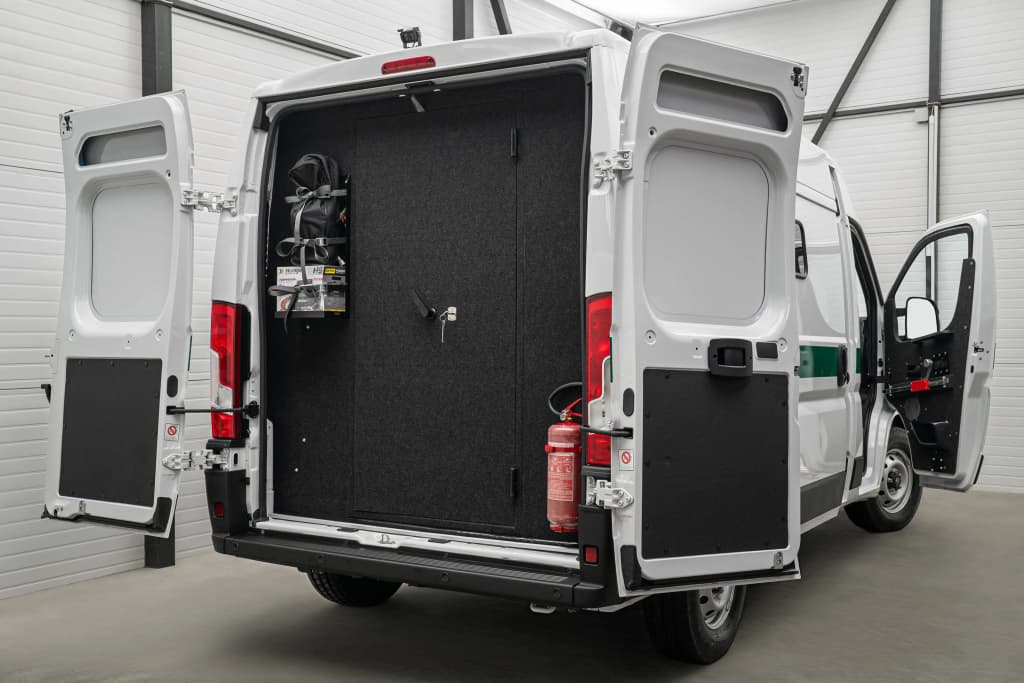
- Specialized Cash-in-Transit (CIT) Vehicles: Engineered for banking logistics (e.g., Citroen Jumper) with reinforced deadbolt systems, multi-point locking mechanisms, and 360° surveillance.
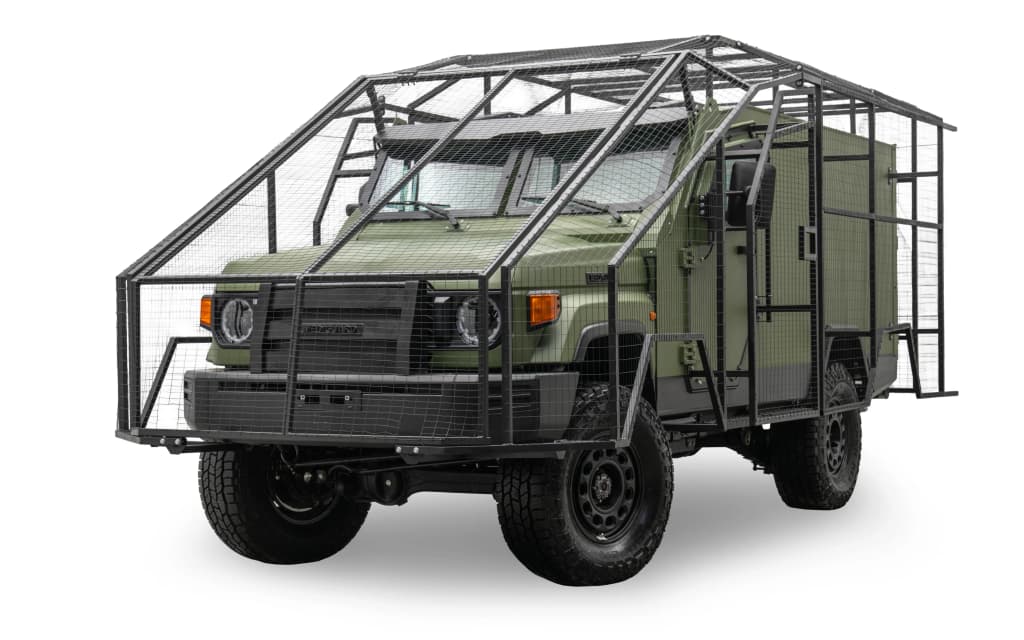
- Military and Special-Purpose Vehicles: Includes Mediguard B6 mobile stabilization points and command units. These prioritize maximum blast resistance and off-road mobility over concealment.
Ballistic Protection Levels (DSTU 3975-2000 Standards)
The protection class defines the vehicle's resilience against specific weapon systems:
- PZSA-3: Protects against 7.62mm (AKM) and 5.45mm (AK-74) rounds. An efficient solution for urban CIT operations and basic civilian security.
- PZSA-4: The industry standard for high-risk zones. Guarantees protection against 5.45mm (hardened core) and 7.62mm (SVD sniper rifle) rounds.
- PZSA-5: High-level ballistic resilience against Armor-Piercing (API) rounds. The primary choice for heads of state and high-threat tactical operations.
Key Engineering & Construction Features
Professional armoring by TRANSFORMERS involves a complete structural overhaul:
- Armored Capsule: Built using high-alloy Swebor Armor steel. We utilize "labyrinth" (overlapping) protection at all door seams and pillars to eliminate ballistic gaps and ricochet risks.
- Ballistic Glass: A multi-layered "sandwich" of polycarbonate and glass (42mm–60mm thick), designed to withstand multiple impacts without spalling.
- Chassis Modernization: Integration of heavy-duty suspension and Alcon braking systems to manage the increased payload capacity while maintaining maneuverability.
- Runflat System: Specialized wheel inserts that allow the vehicle to continue moving at speeds up to 80 km/h even after total tire pressure loss.
Project Cost Factors
The cost of an armored vehicle is a variable engineering calculation based on:
- Base Platform: The complexity of integrating a welded power frame into a Toyota Hilux versus a Land Cruiser 300 differs significantly.
- Protection Configuration: Upgrading from PZSA-3 to PZSA-5 requires deeper recalibration of the brakes and drivetrain to handle the additional weight.
- Advanced Life-Support Systems: Options such as CBRN filtration units, automatic fire suppression, and Electronic Warfare (EW/Jamming) modules.
Why Choose TRANSFORMERS?
We provide a full-cycle production ecosystem: from our in-house design bureau to ballistic testing in accredited laboratories. Every vehicle manufactured by our facility is issued a certificate of compliance and backed by full technical service support.
Contact our experts today for a professional consultation and a customized quote for your mission-specific armored solution.
Date of publication: 24.04.2026
Recently Added
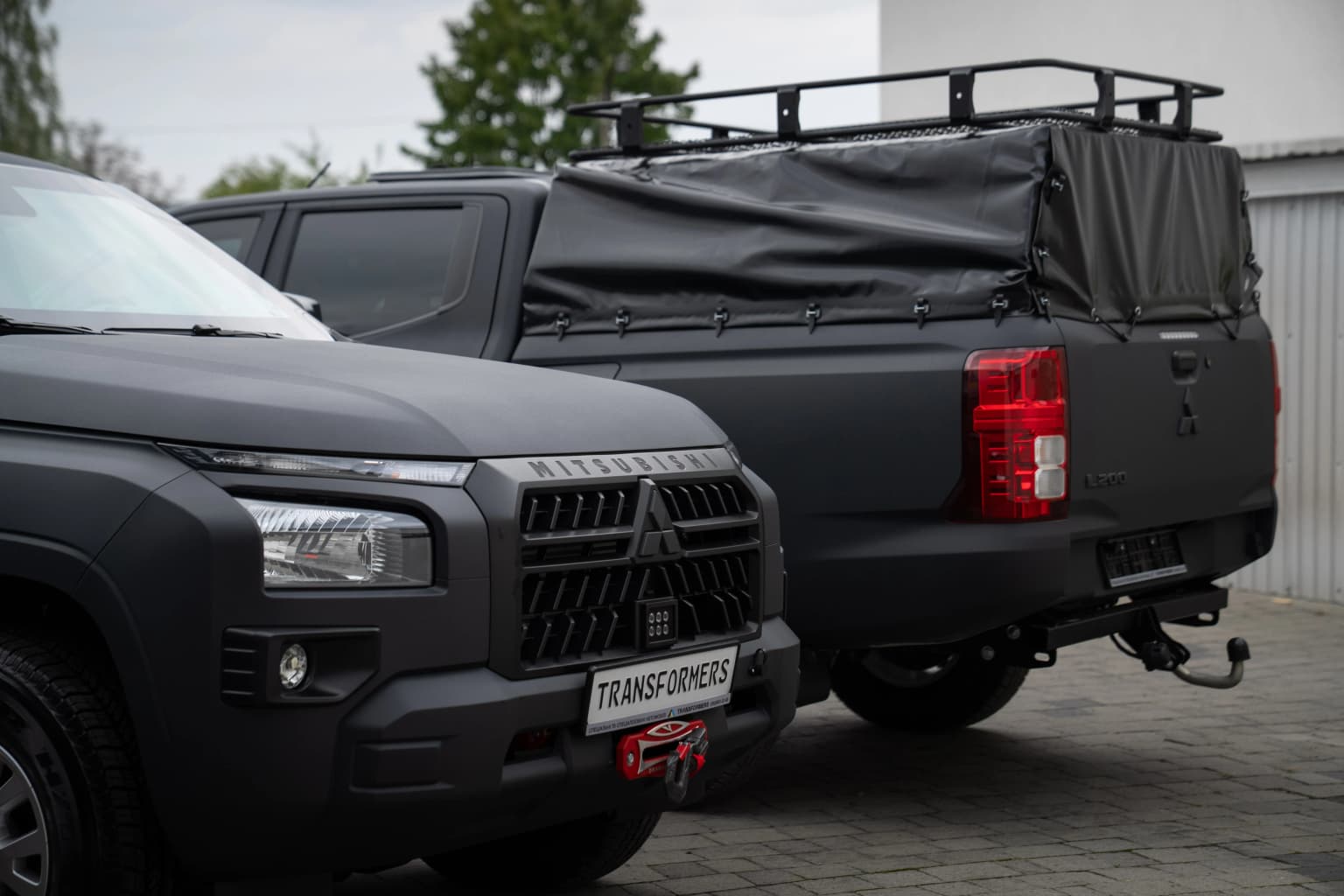
Engineering Body Superstructures and Canopies for Pickup Trucks | TRANSFORMERS
Professional design and manufacturing of aluminum, steel, and soft-top canopies for pickup trucks. Integration with factory vehicle systems and flexible hatch configurations. In-house engineering and design bureau.
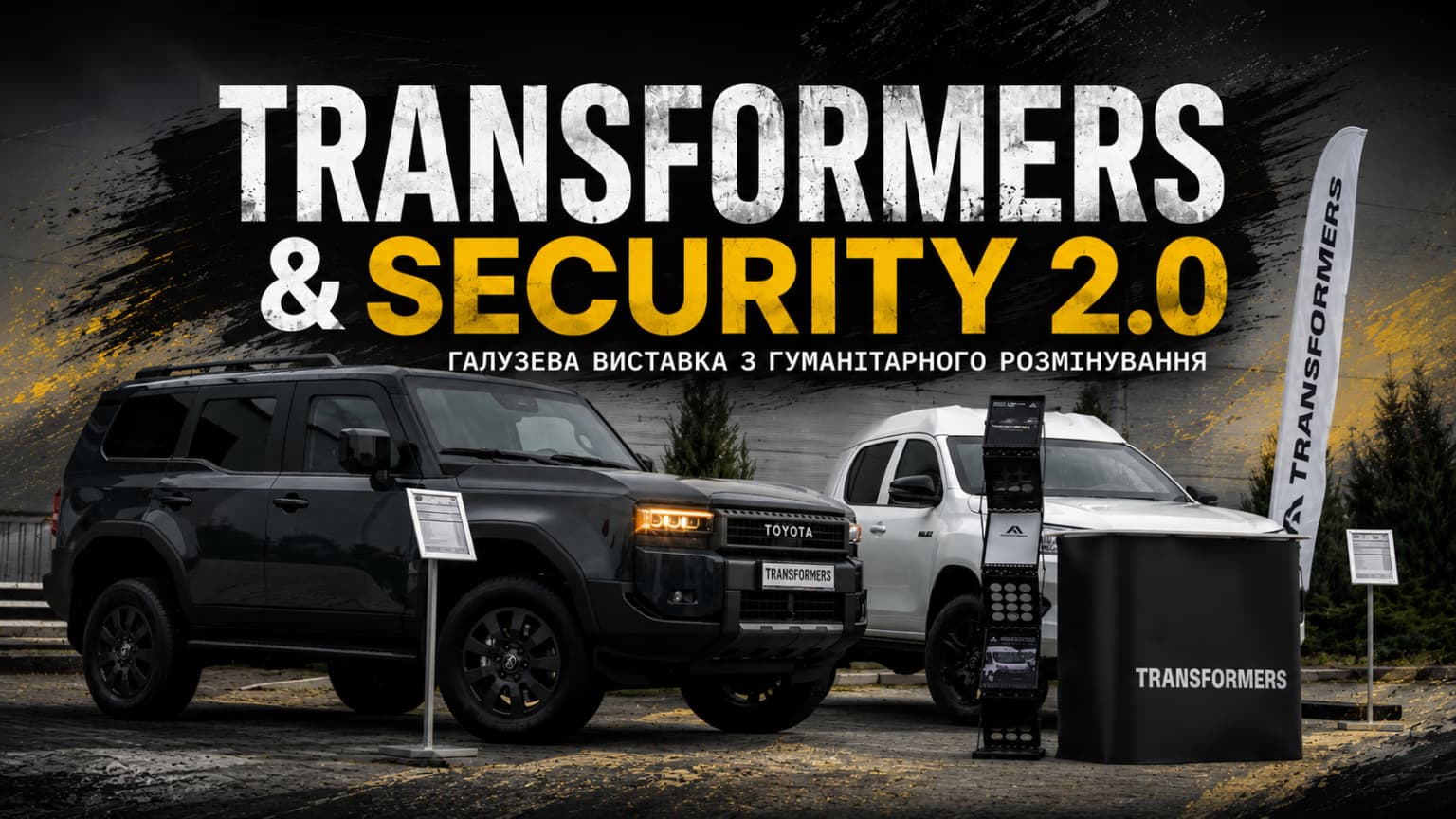
Results of TRANSFORMERS’ Participation in the Security 2.0 International Exhibition: Armored Vehicles Toyota Land Cruiser Prado 250 and Toyota Hilux
Results of TRANSFORMERS’ Participation in the Security 2.0 International Exhibition
Engineering Body Superstructures and Canopies for Pickup Trucks | TRANSFORMERS
Professional design and manufacturing of aluminum, steel, and soft-top canopies for pickup trucks. Integration with factory vehicle systems and flexible hatch configurations. In-house engineering and design bureau.
Results of TRANSFORMERS’ Participation in the Security 2.0 International Exhibition: Armored Vehicles Toyota Land Cruiser Prado 250 and Toyota Hilux
Results of TRANSFORMERS’ Participation in the Security 2.0 International Exhibition
What is a Cash-in-Transit Vehicle and What Tasks Does It Perform?
A modern Cash-in-Transit (CIT) vehicle is not merely a commercial van with a reinforced body, but a complex software and hardware system engineered to mitigate
Evolution of Medical Evacuation: The Upgraded MEDIGUARD — Responding to the Challenges of Modern Warfare
Evolution of Medical Evacuation: The Upgraded MEDIGUARD — Responding to the Challenges of Modern Warfare Today, medical evacuation (CASEVAC) operations require
